+91 9824030645

Creating a professional website starts with choosing the right foundation. One of the first decisions every business owner faces is whether to build a static website or a dynamic website. While both can establish your online presence, they serve different purposes and are suitable for different business requirements.
Understanding their differences can help you invest wisely and build a website that supports your long-term growth.
What is a Static Website?
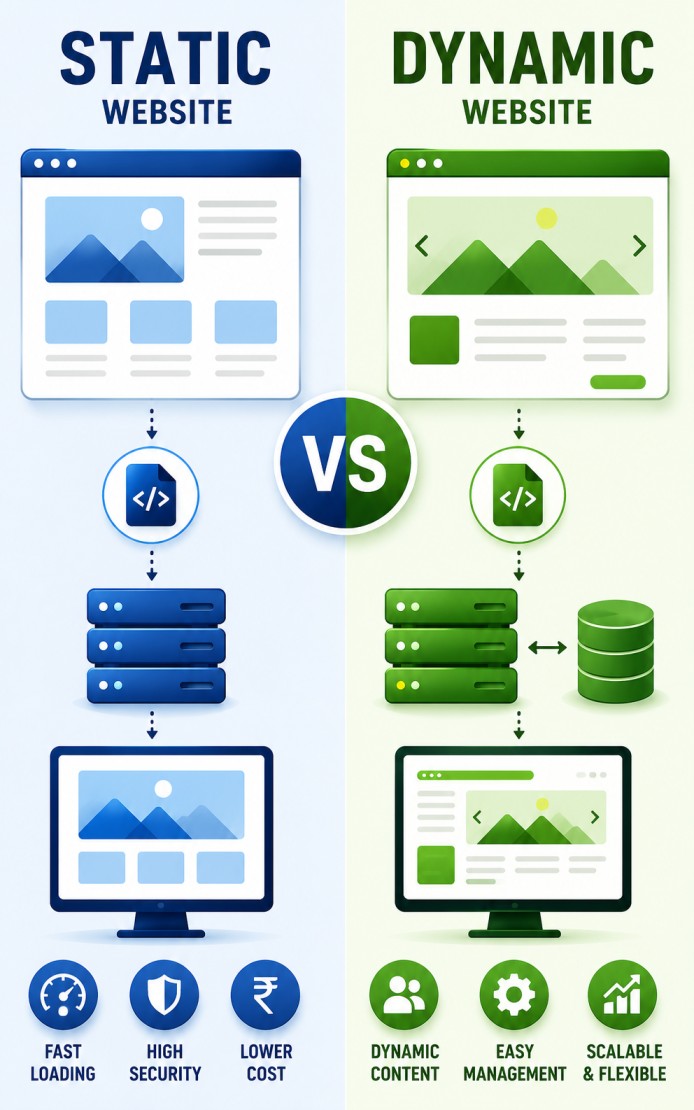
A static website consists of fixed web pages that display the same content to every visitor. Each page is created individually using HTML, CSS, and sometimes JavaScript. Since the content doesn't change automatically, any updates require manual editing.
Static websites are ideal for businesses that only need a few pages such as Home, About Us, Services, Contact, and Gallery.
Advantages of Static Websites
-
Faster loading speed
-
Lower development cost
-
Excellent security due to fewer vulnerabilities
-
Easy hosting requirements
- Simple maintenance for small websites
Limitations
-
Manual updates required
-
No user login system
-
No database integration
-
Limited scalability
-
Not suitable for frequently changing content
What is a Dynamic Website?
A dynamic website generates content in real time using databases and server-side programming languages such as PHP, Laravel, Node.js, or Python. The content can change automatically depending on user actions, stored data, or administrator updates.
Dynamic websites are commonly used for business portals, eCommerce stores, educational websites, healthcare platforms, CRM systems, and booking portals.
Advantages of Dynamic Websites
-
Easy content management
-
Supports user accounts and authentication
-
Database-driven functionality
-
Advanced search and filtering
-
Online forms and customer interaction
-
Highly scalable for future expansion
Limitations
-
Higher development cost
-
Requires regular maintenance
-
More complex infrastructure
Needs stronger security practices
Which Website is Better for Small Businesses?
If your business mainly needs an online presence with company information, services, contact details, and a portfolio, a static website can be a cost-effective solution.
However, if you plan to update content frequently, manage products, accept online inquiries, publish blogs, or integrate customer management features, a dynamic website offers greater flexibility and long-term value.
SEO Performance
Many people believe static websites automatically rank better on Google. In reality, search engines evaluate websites based on content quality, page experience, loading speed, mobile responsiveness, technical optimization, and user satisfaction.
Both static and dynamic websites can achieve excellent search rankings when developed with proper SEO practices.
Cost Comparison
The cost of a static website is generally lower because it requires fewer development hours and simpler hosting.
Dynamic websites involve additional work such as database integration, admin panels, security implementation, and custom functionality, making them a larger investment. However, they often provide greater business value as your company grows.
Which Businesses Should Choose a Static Website?
A static website is suitable for:
-
Startup companies
-
Freelancers
-
Consultants
-
Personal portfolios
-
Local service providers
-
Small agencies
- Landing pages
Which Businesses Should Choose a Dynamic Website?
Dynamic websites are ideal for:
-
Online stores
-
Educational institutes
-
Real estate portals
-
Healthcare providers
-
Hotels and restaurants
-
Travel agencies
-
Membership websites
-
Business management systems
Future Growth Considerations
Before making a decision, think beyond your current needs. Many businesses initially require only a few pages but later want blogs, customer dashboards, appointment booking, payment gateways, or CRM integration.
Choosing a website that can grow with your business can save both time and redevelopment costs in the future.
Final Thoughts
There is no universal answer to whether a static or dynamic website is better. The right choice depends on your business objectives, budget, expected traffic, content strategy, and future expansion plans.
If your goal is a simple, fast, and affordable online presence, a static website is an excellent option. If you require advanced functionality, regular updates, user interaction, or scalable features, investing in a dynamic website is the smarter long-term decision.
A professionally planned website not only strengthens your online presence but also helps build credibility, improve customer engagement, and support sustainable business growth.